
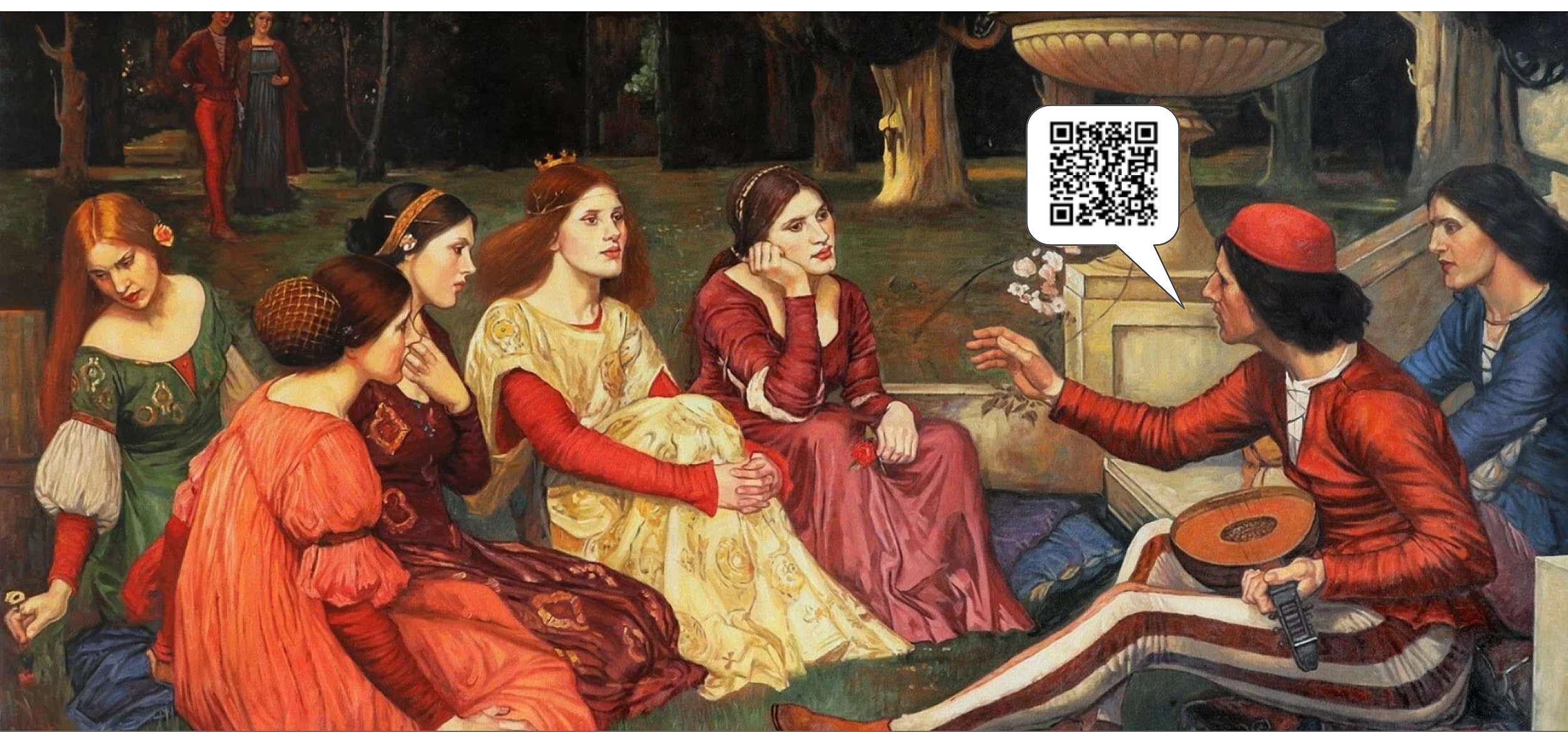
In 1353, in the wake of the Black Death, Giovanni Boccaccio wrote The Decameron. In it, ten fictional people—seven women and three men—hid away in an Italian villa and waited out the plague. They passed the time by telling stories. One-hundred stories, to be exact, over the course of ten long days.
The UNPRECEDENTED Project was a public poetry experiment that circulated The Decameron between strangers during the COVID-19 pandemic. Through the mail, each anonymous participant signed up to receive a few book pages, chose one, and redacted the story’s original text. What was left on the page revealed a poem.


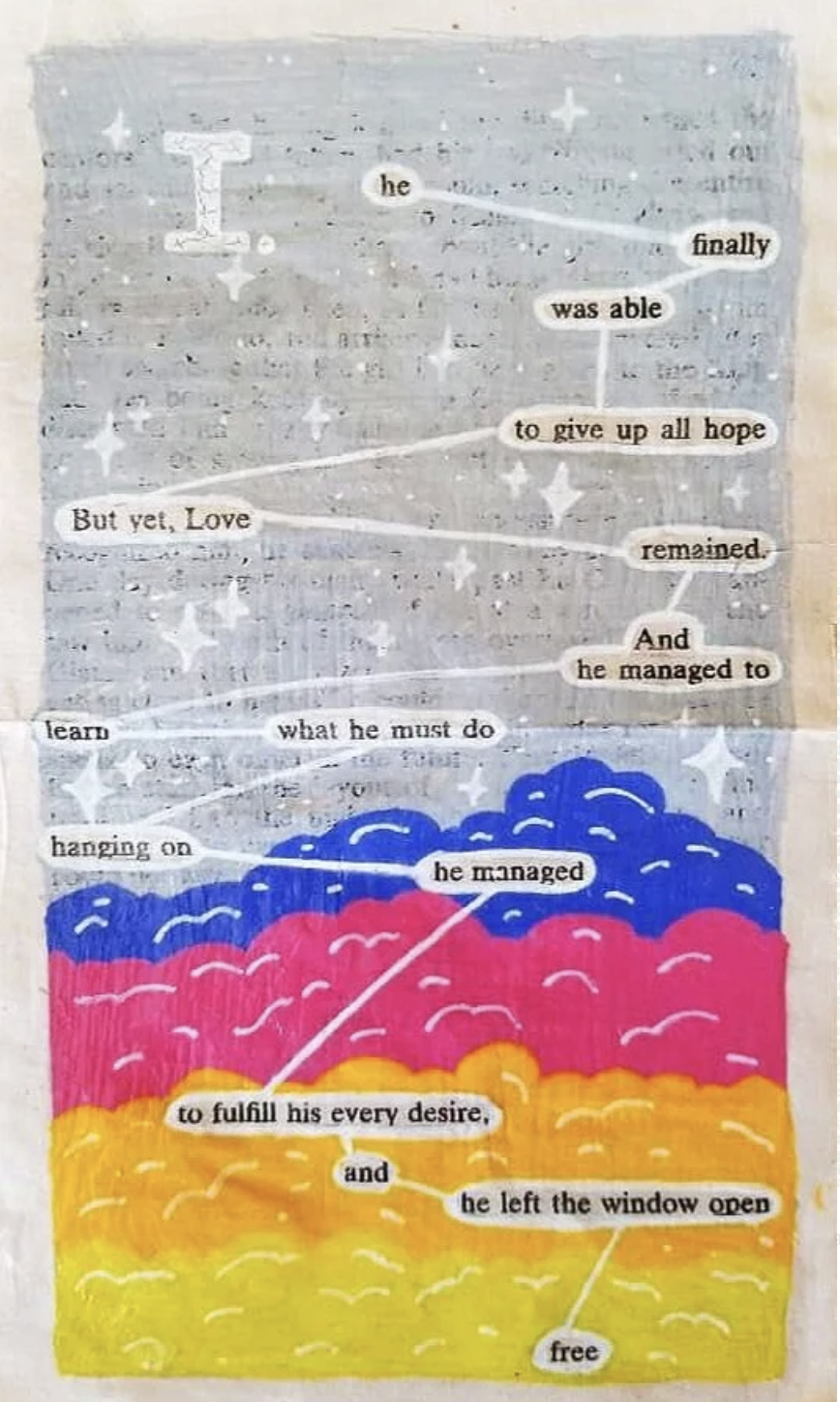


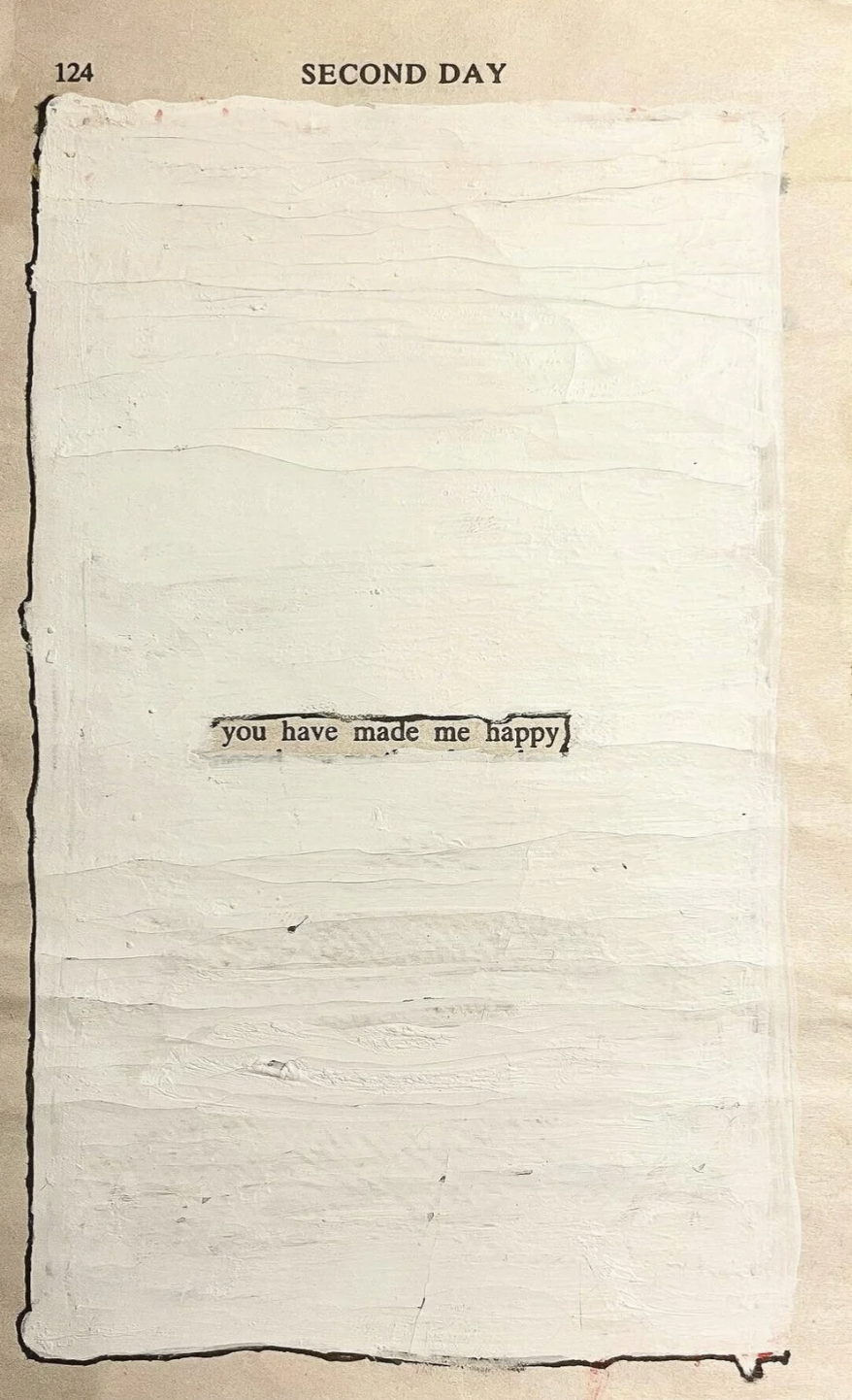
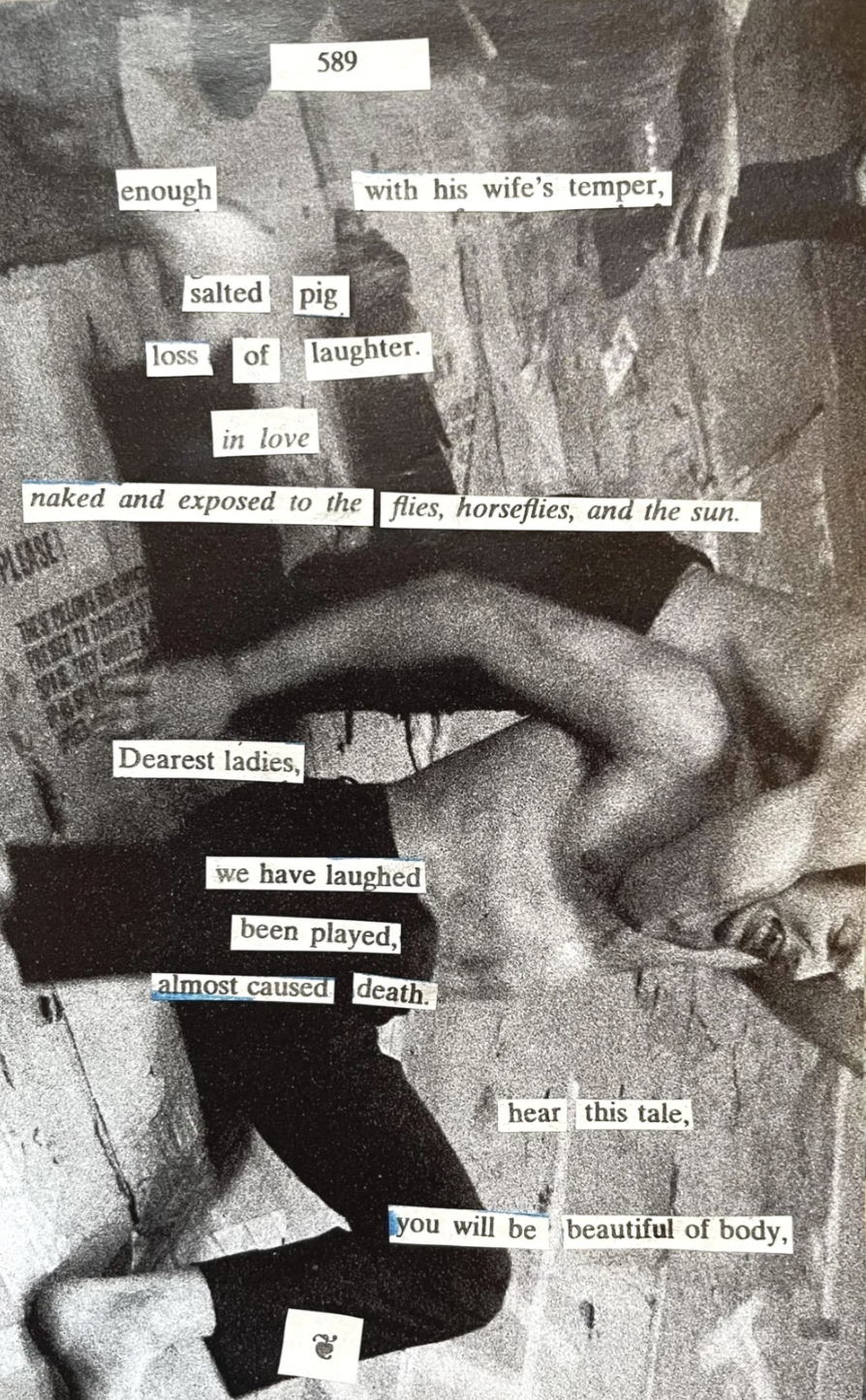
People initially discovered The UNPRECEDENTED Project by finding a QR code in the wild — perhaps pinned to a telephone pole or cafe bulletin board — linked to the page you’re reading now.
Others joined through social media, classroom presentations, or public workshops. And some participants simply received a strange red envelope envelope in the mail, postmarked from an anonymous sender quarantined elsewhere in the world.
Eventually, the project traversed 24 U.S. states and 14 countries.
UNPRECEDENTED’s network of “page-passers” sustained the project for 3 years, and from 2020-2023, the bulk of Boccaccio’s 800-page book was destroyed and reconstructed in the form of erasure poetry.
You can “contact trace” how the pages spread on this map, where one can speculate (though not determine) a poem’s origin. The partial collection also lives in this gallery.
